Condensation and Mould: Why Ventilation Fixes It and Paint Doesn't
If you keep getting condensation on your windows and mould on the walls, the problem is almost always ventilation. Here's what actually works.
Condensation and Mould: Why Paint Doesn't Fix It
Condensation is the most common cause of damp in UK homes. Left unchecked, it leads to mould on walls, ceilings, and around windows. It looks awful and it's bad for your health. But it's almost always fixable once you sort the ventilation.
What Causes Condensation?
Warm, moist air hits a cold surface and turns into water droplets. Cooking, showering, drying clothes, and even breathing all produce moisture. If it has nowhere to go, it ends up on your walls and windows.
Modern homes tend to be worse for it because they're better sealed. Double glazing, draught-proofing, and insulation stop heat escaping, but they also stop air moving. Less airflow means more moisture, and more moisture means mould.
Why Painting Over Mould Doesn't Work
Plenty of people try bleaching the mould and painting over it with anti-mould paint. The mould comes back within weeks because the moisture is still there. You have to fix the ventilation.
What Actually Works
Extractor fans with humidity sensors
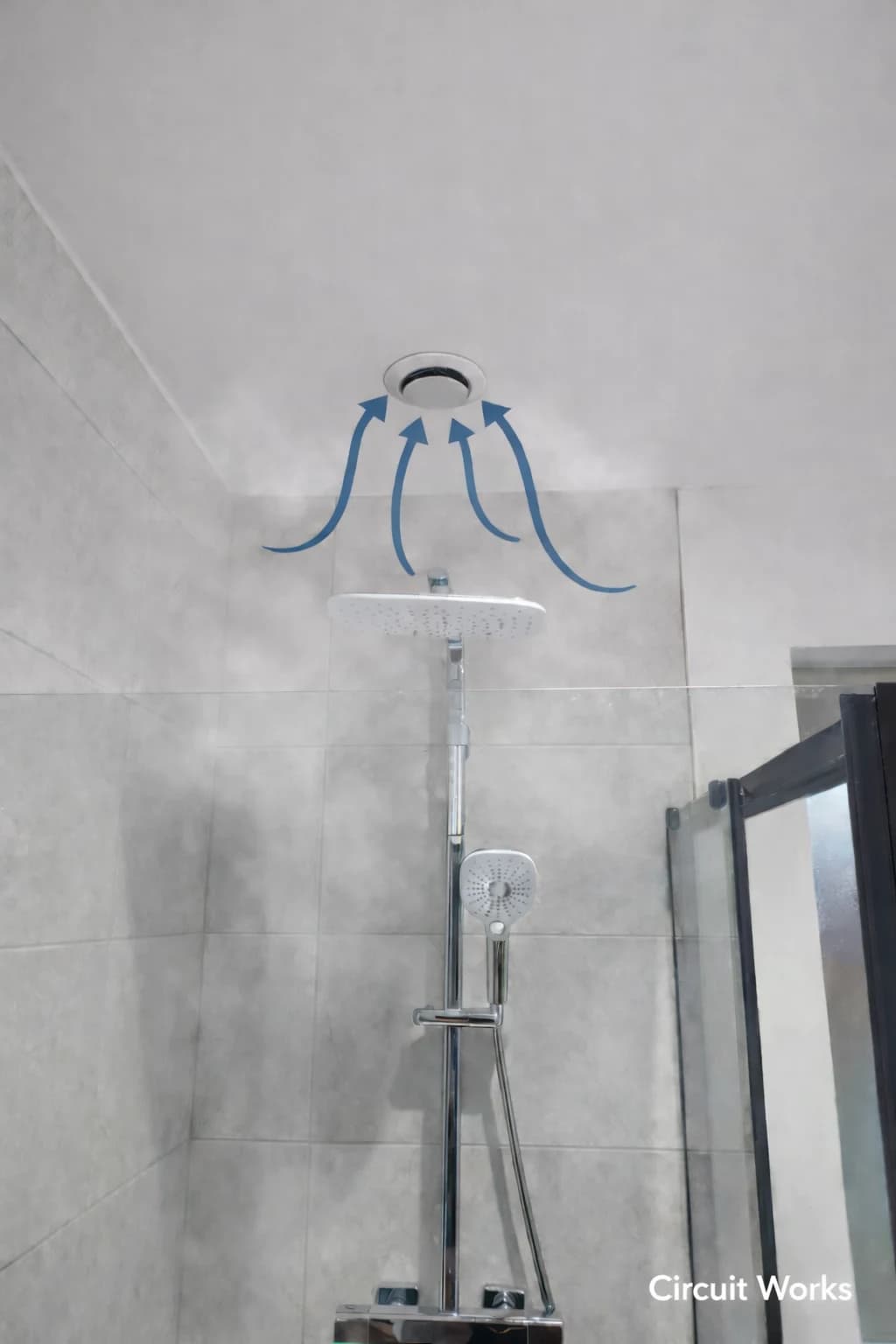
For bathrooms and kitchens, a good extractor fan with a humidistat is usually all you need. It detects the humidity rising and switches on automatically, then runs until the moisture is gone. Quiet, cheap to run, and you don't have to remember to turn it on.
We can connect them to your existing lighting circuit or fit a dedicated circuit.
PIV units (Positive Input Ventilation)
If the whole house has a condensation problem, a PIV unit is usually the answer. It sits in the loft, draws in fresh filtered air from outside, and pushes it into the house through a ceiling diffuser. This creates slight positive pressure that forces the stale, damp air out through natural gaps.
PIV units are quiet (barely audible), cheap to run (£10-20 a year), and they ventilate the whole house rather than just one room. Filters need changing once a year.
Standard extractor fans
For rooms that only get occasional moisture, a fan connected to the light switch with an overrun timer can be enough. It runs while the light is on and for a while after you switch it off.
Where Should Fans Go?
- Bathrooms: Building Regs require mechanical extraction if there's no openable window. Even with a window, a fan works better
- Kitchens: Especially near the hob. A cooker hood venting outside is best
- Utility rooms: If you dry clothes indoors, a fan here makes a big difference
- En-suites and WCs: Often the worst-ventilated rooms in the house
Cost
- Bathroom fan (with humidistat): £150 to £300 fitted
- Kitchen fan: £150 to £350 fitted
- PIV unit (whole house): £400 to £700 fitted
That includes the unit, installation, wiring, and ducting. Fixed price.
Mould and Your Health
The NHS says mould spores can cause respiratory problems (asthma attacks, bronchitis), allergic reactions (sneezing, rashes), and weakened immune response, especially in children, elderly people, and those with existing conditions.
Landlords
Under the Homes (Fitness for Human Habitation) Act 2018, landlords are responsible for fixing damp and mould caused by inadequate ventilation. Fitting extractor fans or a PIV unit is usually the cheapest way to sort it.
Common Questions
Will opening windows fix it? Temporarily, but it's not practical in winter and most people don't leave windows open overnight. Mechanical ventilation gives you constant airflow without losing heat.
How long does an extractor fan take to fit? About 2-3 hours including wiring, mounting, and ducting. A PIV unit is about half a day because of the loft work. Both done in a single visit.
Do I need an electrician? Yes. Fans connect to the mains and may need a new circuit, which is notifiable under Part P. We're NAPIT registered so we can certify the work.
PIV unit vs extractor fan? An extractor pulls moist air out of one room. A PIV pushes fresh air into the whole house from the loft. PIV is better when condensation is a whole-house problem rather than just the bathroom.
Is my landlord responsible? If the mould is caused by poor ventilation (e.g. no extractor fan in a windowless bathroom), yes. It's the landlord's job to fix it under the 2018 Act.
Get an Assessment
Get in touch and we'll take a look at your ventilation for free. We cover Pontefract, Wakefield, Leeds, and West Yorkshire. More questions on our FAQ page.
Have a question about your job?
Send us the details and we'll get back to you within 2 hours during working hours. We cover Pontefract, the Five Towns and West Yorkshire.
Ready for a price now? Get a free quote