Buying Your First Home? Electrical Checks That Could Save You Thousands
What to look out for when buying a house so you avoid costly electrical surprises. From outdated consumer units and old wiring to negotiating money off the asking price with an EICR.

Buying a house is probably the most expensive purchase you will ever make. For most people, it takes years of saving, months of searching, and a mountain of paperwork before you finally get the keys.
So the last thing you want is to move in and discover the electrics are dodgy.
It happens more often than you might think. According to Electrical Safety First, over a third of homebuyers discover electrical problems after completing their purchase, and the average cost to put things right is around £1,704. Even worse, 10% of those people experienced an electrical injury or fire as a result.
The good news is that most of these problems are easy to spot if you know what to look for. Here is what to check before you commit to buying.
The Consumer Unit (Fuse Box)
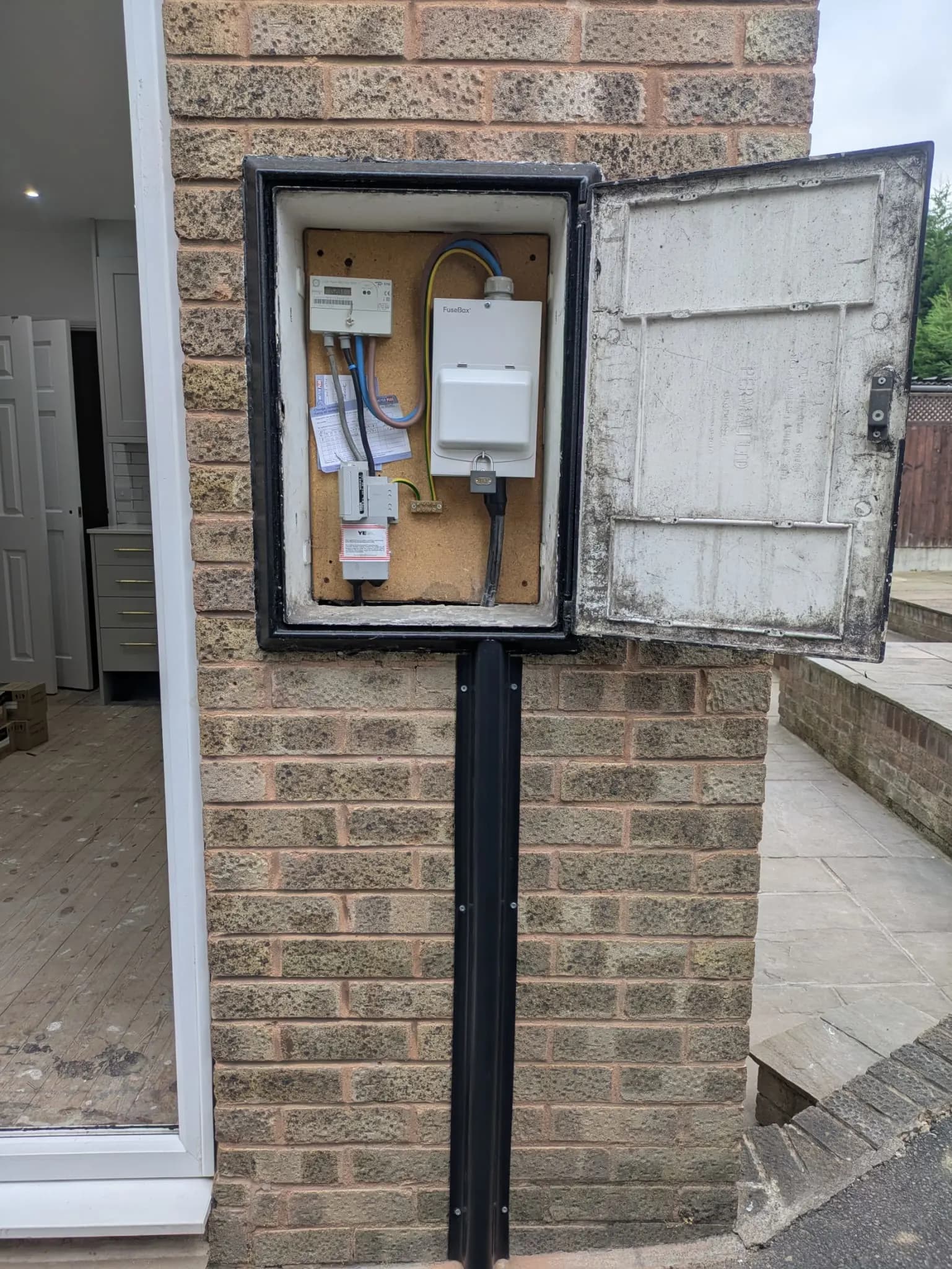
The consumer unit is the box where your electricity supply is distributed around the property. It is usually found under the stairs, in a cupboard, or in the garage.
If you open it up and see old-style rewirable fuses or a wooden back board, that is a clear sign the electrics have not been updated in decades. These older units lack the safety features that modern ones have, like RCD protection, which cuts the power in a fraction of a second if there is a fault.
What to look for:
- Rewirable fuses - these have a piece of fuse wire stretched between two screws. They were common up until the 1960s
- Cartridge fuses - a step up from rewirable, but still outdated. Common from the 1960s to 1980s
- Modern MCBs with RCD protection - this is what you want to see. Individual switches for each circuit and at least one RCD switch
A full consumer unit upgrade typically costs starts at £650, so it is worth factoring that into your offer if the property needs one.
Sockets, Switches, and Visible Wiring
Take a good look around each room during viewings. You can tell a lot about the state of the electrics just from what is visible.
Warning signs to watch for:
- Round pin sockets - these were phased out decades ago and are a sure sign of very old wiring
- Cracked or discoloured sockets and switches - could indicate overheating or just general age
- Brown or black cables on the surface - older rubber or lead-sheathed cables that need replacing
- Scorch marks around sockets or switches
- A burning smell near any electrical fittings
- Sockets that feel warm to the touch when nothing is plugged in
If you spot any of these, it does not necessarily mean you should walk away. But it does mean you should get a professional inspection before you buy.
Check the Age of the Property
The age of a property gives you a rough idea of what to expect from the electrics.
- Pre-1960s - almost certainly needs a full rewire unless one has already been done. Original wiring from this era uses rubber insulation that degrades over time and becomes a fire risk
- 1960s to 1980s - may have PVC-insulated wiring which lasts longer, but the earthing and bonding arrangements often do not meet current standards
- 1990s onwards - more likely to have wiring that meets or is close to current standards, but not guaranteed
Keep in mind that a rewire typically lasts around 25 to 30 years before it needs inspecting or replacing. So even a property built in the 1990s could be due for attention.
Has Any Electrical Work Been Done?
If the seller or estate agent mentions that electrical work has been carried out, ask to see the certificates.
Since 2005, most electrical work in England and Wales needs to comply with Part P of the Building Regulations. That means it should have been either done by a registered electrician who can self-certify, or inspected and signed off by building control.
Ask for:
- An Electrical Installation Certificate (EIC) - issued when new wiring or circuits have been installed
- A Minor Electrical Installation Works Certificate (MEIWC) - for smaller jobs like adding a socket or light fitting
- An EICR (Electrical Installation Condition Report) - a periodic inspection report that checks the overall condition
If there are no certificates and you can see that work has been done (new sockets, a loft conversion, a kitchen extension), that is a red flag. The work may not have been done to a safe standard.
Think About Where You Will Want Extra Sockets
This one catches a lot of first-time buyers out. Older properties often have far fewer sockets than you would expect. It is not unusual to find bedrooms with just one or two double sockets, or kitchens with barely enough for a kettle and a toaster.
Walk around during viewings and think about where you will actually need power:
- Bedrooms - phone chargers, bedside lamps, TVs, gaming setups
- Living room - TV, sound bar, lamps, games consoles, routers
- Kitchen - kettle, toaster, microwave, coffee machine, air fryer, slow cooker
- Home office - computer, monitor, printer, desk lamp, phone charger
If the property is short on sockets, do not panic. Adding extra sockets is straightforward and relatively affordable. But it is much easier and cheaper to do before you move all your furniture in.
If you are looking at adding sockets across several rooms, get in touch for a quote and we can give you a price before you complete.
A Modern Consumer Unit Does Not Always Mean Modern Wiring
This is one of the most common misconceptions. Buyers see a shiny new consumer unit and assume the whole house has been rewired. That is not always the case.
It is perfectly possible (and actually quite common) for an electrician to fit a new consumer unit onto old wiring. The consumer unit itself might be brand new, but the cables running through the walls could still be 30, 40, or even 50 years old.
The only way to know for sure is to have the wiring tested. Which brings us to the most important point.
Why an EICR Before You Buy Could Save You Thousands
An EICR (Electrical Installation Condition Report) is a thorough inspection of the entire electrical installation in a property. A qualified electrician will test the wiring, check the consumer unit, inspect the earthing and bonding, and test every circuit.
At the end, you get a detailed report that grades every part of the installation:
- C1 - danger present, needs immediate attention
- C2 - potentially dangerous, needs urgent remedial work
- C3 - improvement recommended but not essential
- Satisfactory - everything is in good order
Here is why this matters when you are buying a house. If the EICR reveals C1 or C2 issues, you have solid evidence to negotiate money off the asking price. We are not talking about small amounts either. A full rewire on a 3-bed semi can cost £3,000 to £5,000, and a consumer unit upgrade adds another £500 to £800 on top.
An EICR for a typical 2-3 bedroom house costs between £150 and £250. That is a tiny investment compared to the thousands you could save, or the thousands you might end up spending if you skip it.
One in five buyers mistakenly believe that a standard house survey covers the electrics. It does not. A surveyor will note visible issues, but they do not test the wiring or open up the consumer unit.
You can request an EICR quote here - we cover Pontefract and surrounding areas across West and South Yorkshire.
Get the Work Done Before You Move In
If the EICR or your own observations reveal that work needs doing, there is one piece of advice that could save you a lot of hassle and money: get it done before you move in.
Electrical work, particularly rewires, is messy. Electricians need to lift floorboards, chase cables into walls, and drill through joists. If the house is empty, they can work faster, move freely between rooms, and there is no risk of damage to your furniture or belongings.
It is also cheaper. When a property is furnished and occupied, electricians have to work around obstacles, protect flooring and furniture, and sometimes move things out of the way. All of that adds time, and time is money.
If you are planning on redecorating after you move in anyway, this is a no-brainer. Get the electrical work done first, then plaster, paint, and decorate over the top. You will get a cleaner finish and avoid having to redecorate twice.
The same applies to adding extra sockets. If you know you want more sockets in the bedrooms or a dedicated circuit for an EV charger on the drive, get it done while the house is empty.
Quick Checklist for Viewings
Print this off or save it on your phone before your next viewing:
- [ ] Check the consumer unit - does it have modern MCBs and RCD protection?
- [ ] Look at the sockets - are they modern square pin with no cracks or discolouration?
- [ ] Check for surface-mounted cables in unusual colours (black, brown, or fabric-covered)
- [ ] Count the sockets in each room - will you have enough?
- [ ] Ask the seller about any electrical work and request certificates
- [ ] Note the age of the property
- [ ] Check if sockets feel warm or show scorch marks
- [ ] Look for extension leads everywhere - a sign there are not enough sockets
Frequently Asked Questions
Have a question about your job?
Send us the details and we'll get back to you within 2 hours during working hours. We cover Pontefract, the Five Towns and West Yorkshire.
Ready for a price now? Book & pay online