Garden Room Electrics: How to Get Power to Your Garden Office
Everything you need to know about wiring a garden room or office - armoured cable, ducting, sub-main consumer units, trench routing, ethernet for reliable internet, costs, and Building Regulations requirements.
Garden Room Electrics: How to Get Power to Your Garden Office
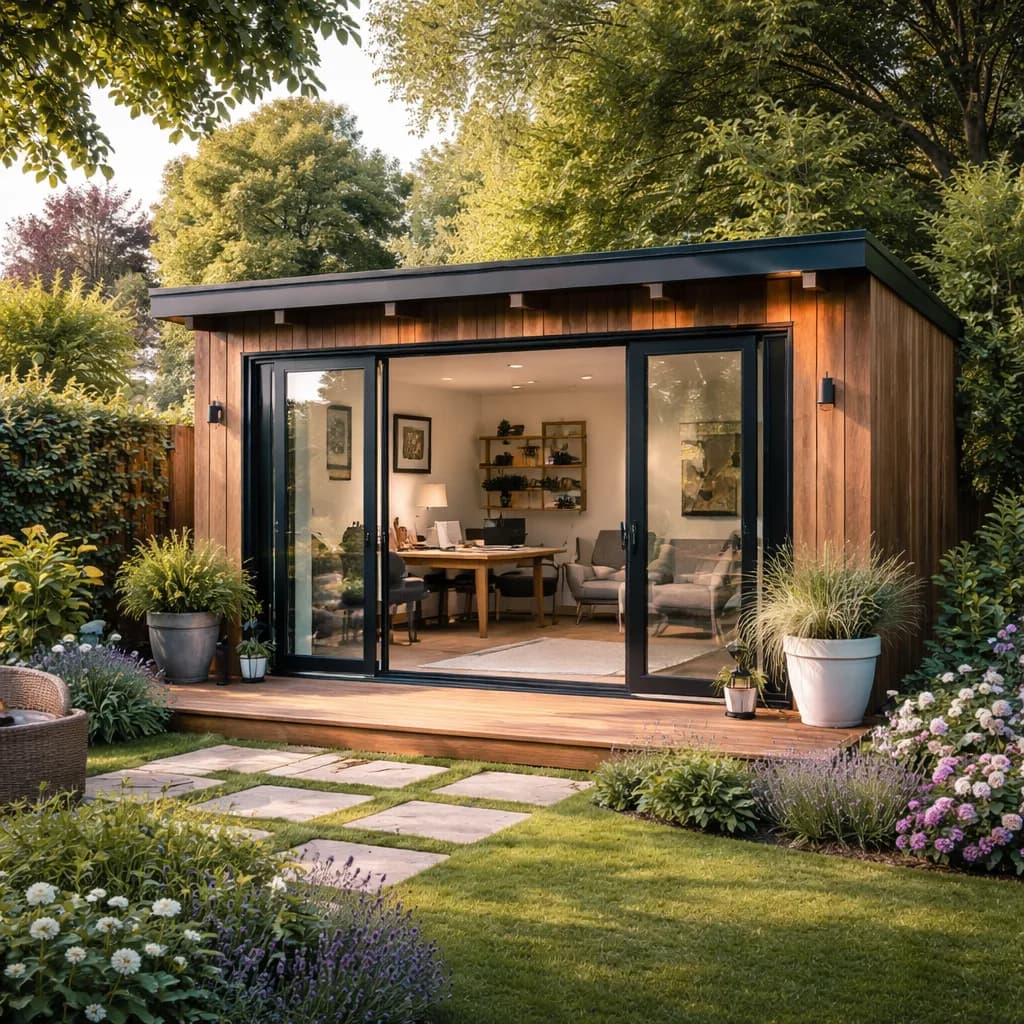
Garden rooms and garden offices have become one of the most popular home improvements in the UK. Whether you are setting up a home office, a gym, a studio, or an extra living space, getting the electrics right is essential - and it is not as simple as running an extension lead across the lawn.
Here is a complete guide to how garden room electrics work, what is involved, and how much it costs.
Why You Cannot Just Use an Extension Lead
This is worth stating clearly. Running an extension lead or even a heavy-duty cable from your house to a garden building is dangerous and against wiring regulations. Extension leads are not designed for permanent outdoor use - they degrade in UV light, are a trip hazard, and provide no earth fault protection for an outbuilding.
A garden room needs a properly installed electrical supply with its own protective devices. This is not optional - it is a legal requirement.
How Power Gets to Your Garden Room
The standard method for supplying power to an outbuilding is a sub-main cable run from your house consumer unit to a new consumer unit inside the garden room. Here is how the process works:
1. Supply Assessment
First, we check whether your existing consumer unit and electricity supply can support the additional load. A typical garden office needs a 32A or 40A radial circuit, which most domestic supplies can accommodate. If your consumer unit is full or outdated, an upgrade may be needed before the sub-main can be connected.
2. Armoured Cable
The cable used for garden room supplies is SWA (Steel Wire Armoured) cable. This is a heavy-duty cable with a steel armour layer that protects against physical damage. It is designed to be buried underground or run along surfaces where it might be exposed to impact.
Your electrician will calculate the size of cable needed for a garden office. It all depends on a range of factors like the length of the run and the load required. For longer runs (over 20 metres) or higher loads (electric heaters, hot tubs), larger cable may be needed.
3. Cable Routing
The armoured cable needs to get from your house to the garden room. There are two main options:
Trench digging can be done by hand for shorter runs, but for longer distances across established gardens, you may want to hire a mini digger or have the groundwork done professionally. We can advise on the best approach for your garden.
4. Sub-Main Consumer Unit
Inside the garden room, a dedicated consumer unit is installed. This contains its own RCD and MCB protection for the circuits within the building. A separate consumer unit means that a fault in the garden room does not trip the house electrics, and vice versa.
Typical circuits in a garden room include:
- Ring main or radial circuit for sockets
- Lighting circuit
- Dedicated circuit for high-load items (e.g. electric heater, air conditioning unit, server)
The consumer unit is sized to match the circuits you need, with spare capacity for future additions.
5. Internal Wiring
Once the supply is in, the garden room is wired internally just like any room in your house - sockets, light switches, data points, and any dedicated circuits. If you are using the space as an office, we recommend:
- Plenty of double sockets (at least 4-6 around the room)
- USB charging sockets at desk locations
- A wired ethernet data point rather than relying on Wi-Fi (more on this below)
- An outdoor light above the door for access after dark
Wi-Fi vs Ethernet: Do Not Rely on the Signal
One thing that catches a lot of garden office owners out: the Wi-Fi signal from the house is often not strong or stable enough at the bottom of the garden. Brick walls, distance, and interference all take their toll, and the result is a connection that drops out halfway through a Teams or Zoom call - not what you want when the whole point of the office is professional home working.
The fix is simple if you plan it at the right time. Installing a suitably rated CAT6 ethernet cable alongside the power supply guarantees a strong, reliable internet connection regardless of how far the garden room is from the router. A wired connection gives you full speed and low latency for video calls, and it is just as valuable if the space doubles as somewhere to stream movies or sport, or for online gaming.
Because we run cables in ducting wherever possible, the data cable goes in at the same time as the power - one trench, one visit, no extra disruption. Retrofitting a data cable later means digging again (or falling back on Wi-Fi extenders, which rarely match a wired connection), so if there is any chance you will work from the garden room, have the CAT6 installed from day one.
Is It Notifiable Work?
Yes. Electrical work in a garden room or outbuilding is notifiable under Part P of the Building Regulations if it involves a new circuit. This means the work must be either:
- Carried out by an electrician registered with a competent person scheme (such as NAPIT), who can self-certify the work and notify Building Control on your behalf, or
- Inspected and approved by your local Building Control department
At Circuit Works, we are NAPIT registered (registration number 72679) and handle all Building Regulations notification as part of the job. You do not need to contact Building Control separately.
On completion, you will receive an Electrical Installation Certificate (EIC) confirming the work meets BS 7671:2018 standards.
How Much Does It Cost?
Garden room electrical installations vary depending on the distance from the house, the number of circuits, and any additional requirements. Here are typical price ranges:
- Basic supply only (armoured cable, consumer unit, single circuit, up to 15m run): £600 - £1,000
- Standard garden office (supply, sockets, lighting, up to 25m run): £1,000 - £1,800
- Full specification (supply, multiple circuits, outdoor lighting, data, heater circuit, 25m+ run): £1,800 - £3,000+
- Trench digging (if not DIY): £200 - £600 depending on length and surface type
These prices include all materials, labour, testing, and certification. VAT is included.
Key Considerations
Get a Free Quote
If you are planning a garden room, office, gym, or studio, get in touch for a free, no-obligation quote. We will assess your existing supply, advise on the best cable routing, and provide a fixed price covering everything from the trench to the last socket. See our sockets, switches and lighting services for more detail.
Have a question about your job?
Send us the details and we'll get back to you within 2 hours during working hours. We cover Pontefract, the Five Towns and West Yorkshire.
Ready for a price now? Get a free quote