Do I Need to Upgrade My Fuse Box? Signs It's Time
An old fuse box is not automatically illegal, but it may be missing protection that modern boards give you. Here are the signs it is time to upgrade, and how to find out for sure.
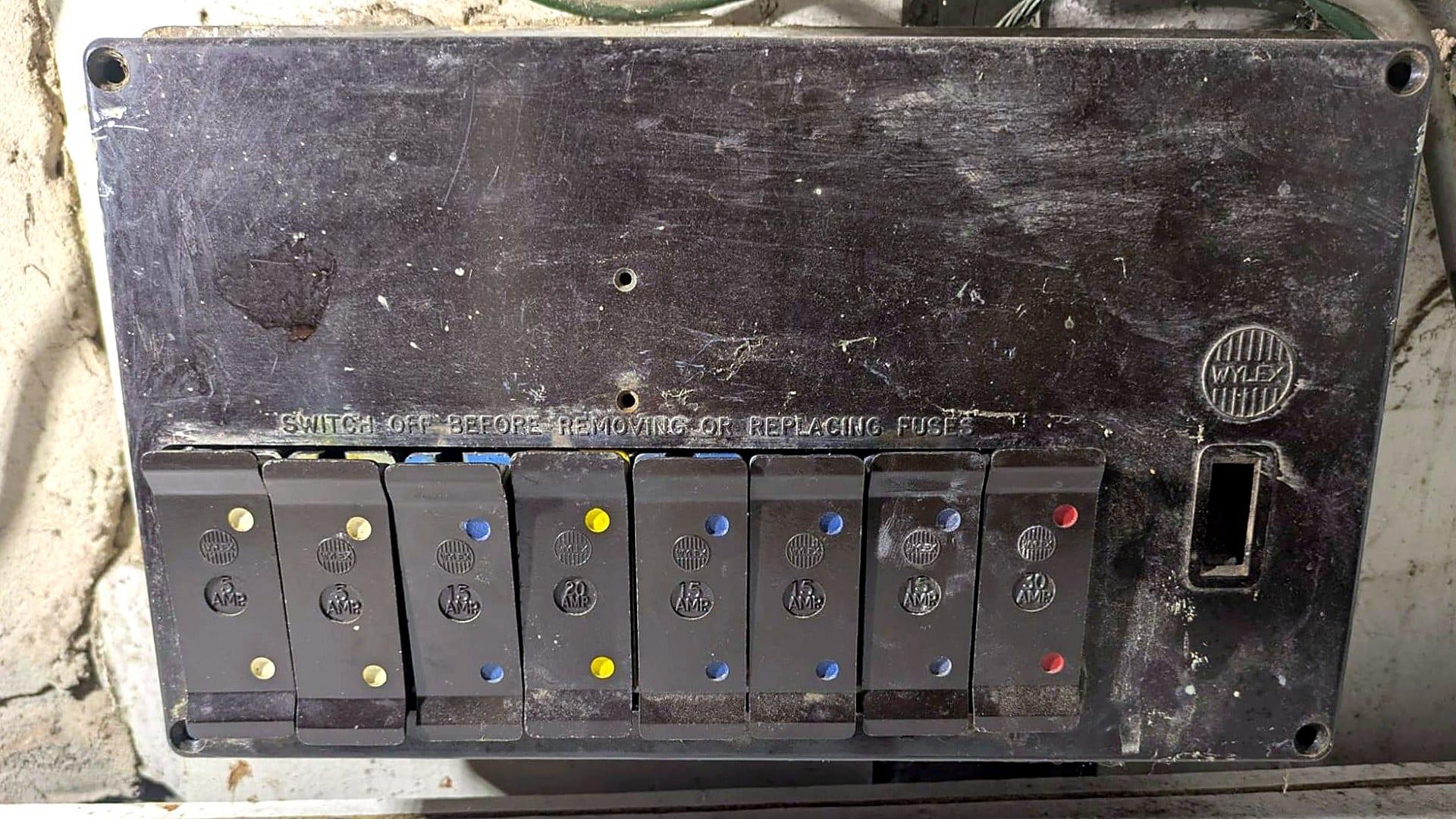
If your fuse box has been on the wall since before you moved in, you have probably wondered at some point whether it needs replacing. Maybe a friend has had theirs done, a kitchen fitter has mentioned it, or you have noticed it looks nothing like the neat white boards in newer houses.
The short answer is that an old fuse box is not automatically illegal or unsafe. But older boards often lack protection that modern ones provide as standard, and some show signs that genuinely need acting on. This guide explains what to look for and how to find out where you stand.
Is an Old Fuse Box Illegal?
No. There is no law that says homeowners must replace a fuse box just because it is old. The wiring regulations (BS 7671) apply to new work. An installation that met the rules when it was put in is not suddenly non-compliant because the rules have since moved on.
What matters is whether it is still safe. That is a judgement an electrician makes by inspecting and testing it, not by looking at its age.
For landlords, the position is a bit firmer. Private landlords in England must have the electrical installation inspected and tested at least every five years, and any issues classed as dangerous or potentially dangerous must be put right. An old board will not fail on age alone, but missing protection or damaged parts can lead to remedial work being required. Our guide to landlord EICR requirements covers this in detail.
Why Upgrading Is Usually Worth It
Even if your old fuse box is not breaking any rules, there is a strong safety case for upgrading. The main reasons are below.
No RCD Protection
This is the big one. An RCD (residual current device) watches for current leaking to earth, which is what happens when someone touches a live part or a cable is damaged. It switches off fast enough to greatly reduce the risk of a fatal shock.
Current regulations require 30mA RCD protection for socket outlets rated up to 32A, and for cables buried in walls at shallow depth, which in practice covers most circuits in a home. Many older fuse boxes have no RCD at all. If yours does not have a button marked "T" or "Test", there is a good chance it has none.
Fuses and older circuit breakers only protect the cables from overload and short circuits. They do nothing to protect a person who touches something live.
Rewirable Fuses
Rewirable fuses are the ceramic or plastic carriers with a length of fuse wire running through them. They still work when fitted with the right wire, but they have real drawbacks:
- It is easy to fit the wrong size wire, or something that is not fuse wire at all, which removes the protection
- You have to handle the fuse carriers to reset them, often in the dark
- They are generally slower to disconnect than modern circuit breakers
If you find yourself keeping a card of fuse wire next to the board, that is a fairly clear sign your installation is due a look.
Wooden Backboards and Plastic Boards
Very old installations are often mounted on a wooden board, sometimes with a mix of separate fuse boxes and switches added over the years. Electrical Safety First lists a fuse box with a wooden back, cast iron switches or a haphazard mix of fuse boxes as signs of an older installation that should be checked.
There is also the question of what the board itself is made of. Since 1 January 2016, Regulation 421.1.201 of BS 7671 (introduced by Amendment 3 to the 17th Edition) has required consumer units in domestic premises to have an enclosure made of non-combustible material, or to be housed in a non-combustible cabinet. In practice that means a metal (steel) enclosure. The aim is to contain any fire that starts inside the board, most often from a loose or overheated connection.
Plastic consumer units fitted before then are not illegal and do not have to be ripped out. But if you are replacing a board, the new one must meet this requirement, and it is one more reason a metal board is the safer place to be.
Warning Signs You Should Not Ignore
Some signs are not about age at all. They point to a problem that needs looking at soon, whatever type of board you have.
- Burning smells near the board, or scorch marks or discolouration on the casing or fuse carriers
- The board or fuses feel warm to the touch. A consumer unit should not get noticeably warm
- Buzzing or crackling from the board
- Fuses blowing or breakers tripping regularly, especially if it is always the same circuit
- Flickering lights when appliances switch on
- Cracked or damaged casing, or a board with missing covers where live parts could be touched
If you notice burning smells, scorching or heat, switch off at the main switch if it is safe to do so and get an electrician out. Do not take the cover off or try to investigate yourself.
Adding New Circuits
Even a perfectly healthy old board can become a problem when you want to add something new. Common examples include:
- An EV charger, which needs its own dedicated circuit and suitable protection
- A new kitchen, where an electric oven, hob or extra socket circuit may be needed
- An electric shower, which typically needs a large dedicated circuit
- A garden room or outbuilding, which needs its own supply
Adding a new circuit is notifiable under Part P of the Building Regulations in England, and the new circuit must meet current regulations, including RCD protection. Old fuse boxes often have no spare ways and no way of adding suitable RCD protection, so the practical answer is usually a new consumer unit. It is also cheaper to do both at the same time than as separate jobs.
How to Find Out for Sure: an EICR
Looking at a fuse box tells you a bit. Testing tells you a lot more. The proper way to find out whether your board and wiring need work is an EICR (Electrical Installation Condition Report).
An EICR involves a visual inspection and a set of tests on every circuit. It tells you:
- Whether the installation is safe to keep using
- Whether there is any RCD protection, and whether it works
- The condition of the wiring itself, which matters if you are considering a new board
- Any issues coded by how urgent they are
Our EICRs start from £115 including VAT for a studio flat, and houses are £155 to £310 depending on the number of bedrooms. You can get an instant EICR quote online. If you want to know more first, read what an EICR is and whether you need one.
One more reason to test first: a new consumer unit with RCD protection can expose faults in older wiring that the old fuse box never noticed. If testing does turn up problems, our guide to what happens if a property fails an EICR explains the next steps.
What Does an Upgrade Involve?
A typical consumer unit upgrade looks like this:
- Testing the existing circuits so we know what we are connecting to
- Removing the old fuse box and fitting a new metal consumer unit, usually with an RCBO on each circuit
- Checking the main earthing and bonding, and upgrading it if needed
- Testing every circuit and the RCD protection on the new board
- Issuing an Electrical Installation Certificate and notifying Building Control through NAPIT
Most board changes are done in a day, with the power off for most of it. You can read more in our guide to replacing an old fuse box.
How Much Does It Cost?
Our consumer unit upgrades start from £650 including VAT, covering the new board, testing, certification and Building Control notification. The final price depends on the number of circuits, the state of the earthing and bonding, and what testing finds on the existing wiring.
Frequently Asked Questions
Get a Quote
If you are not sure whether your fuse box needs upgrading, the best first step is an EICR. Get an instant EICR quote, or take a look at our consumer unit upgrade service and contact us to arrange a visit.
Have a question about your job?
Send us the details and we'll get back to you within 2 hours during working hours. We cover Pontefract, the Five Towns and West Yorkshire.
Ready for a price now? Get a fixed price