What Size Armoured Cable for a Garden Room?
What decides the size of armoured cable to a garden room, from the load and run length to earthing and burial depth, with typical examples explained in plain English.
"What size armoured cable do I need for my garden room?" is one of the questions we get asked most. The honest answer is that there is no single right size. The cable has to be worked out for your garden room, your house and your garden. This guide explains what decides the size, gives some typical examples, and covers the things that matter just as much as the cable itself.
Why There Is No One-Size-Fits-All Answer
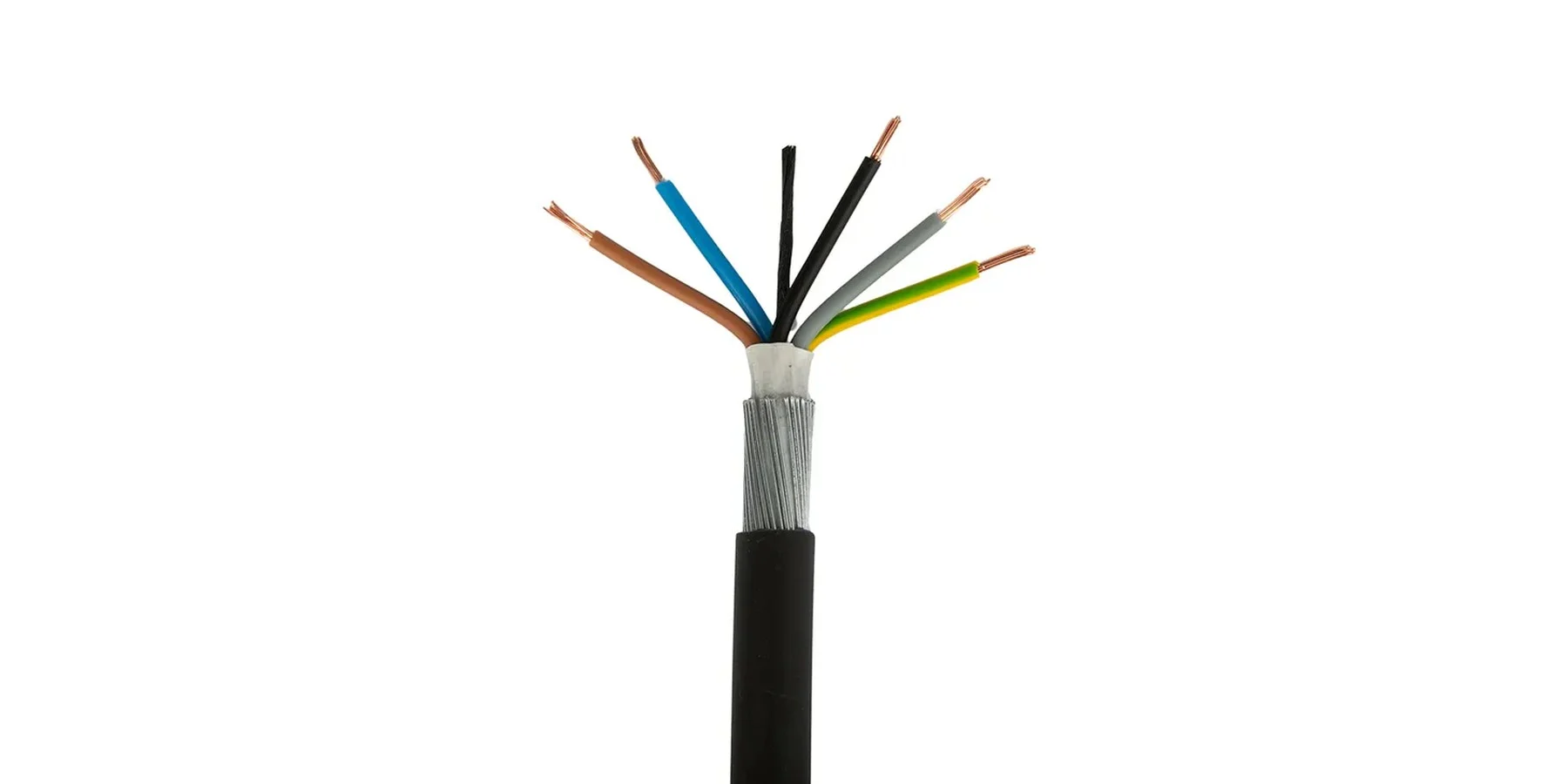
Armoured cable (usually called SWA, for steel wire armoured) comes in sizes such as 2.5mm², 4mm², 6mm², 10mm² and 16mm². The number is the cross-sectional area of each copper core. A bigger cable carries more current and loses less voltage over distance, but it costs more and is harder to work with.
An electrician chooses the size by working through several factors under BS 7671, the UK wiring regulations. Get any of them wrong and the cable could overheat, the voltage at the garden room could be too low, or the protection might not disconnect quickly enough in a fault.
What Decides the Cable Size
1. What you want to run in the garden room
The starting point is the load. A garden office with a few sockets, LED lighting and a laptop is a very different job from a garden gym, a home bar or a room with a large electric heater running all day.
Things that push the load up include:
- Electric heating, such as panel heaters or an air-to-air heat pump
- Air conditioning
- Kettles, microwaves and other kitchen appliances in an annexe or bar
- A hot tub next to the garden room, fed from the same supply
- An EV charger fed from the garden room or a garage
It is worth thinking about what you might want in five years, not just next week. Upgrading the cable later means digging the trench up again.
2. How far the cable has to run
Every metre of cable loses a little voltage. Over a long run, that adds up. BS 7671 sets limits on how much voltage can be lost between the origin of the installation and the equipment: for a home on a public supply, 3% for lighting and 5% for other circuits.
On long garden runs, voltage drop, not the current the cable can carry, is often what decides the size. A cable that would be perfectly adequate over 10 metres might need to go up one or two sizes over 40 metres.
3. The protective device
The cable is protected by a circuit breaker (often an RCBO) in your consumer unit. The breaker rating has to suit both the load and the cable. A 32A circuit needs a cable that can carry 32A in the way it is installed. The breaker also has to disconnect quickly enough in a fault, which depends on the resistance of the whole circuit, and that gets harder over long distances.
4. How the cable is installed
How the cable is run changes how much current it can carry. A cable buried in the ground, run in a duct, or clipped to a wall or fence will each have a different rating. Cables grouped with others, or run through insulation, are rated lower again.
5. The earthing arrangement
This is the part that often gets overlooked, and it can affect the cable you need. We cover it in its own section below.
Typical Examples (Not a Sizing Table)
To give you a feel for what is common, here are some typical scenarios. These are examples only. Your electrician must confirm the size with a proper calculation for your installation.
- A modest garden office close to the house, with lighting, a few sockets and a small heater, is often fed with 4mm² or 6mm² three-core SWA, depending on the run length and the circuit rating
- A garden office with heating, 20 to 30 metres away, commonly ends up on 6mm² SWA, because voltage drop starts to become a factor
- A longer run of 35 to 50 metres at 32A, or a room with heavier loads such as a kitchenette or air conditioning, often needs 10mm² SWA or larger
- Adding an EV charger or hot tub to the same supply usually means a larger cable again, and those items have their own specific earthing and protection requirements
The difference in price between one cable size and the next is often small compared with the cost of digging the trench twice. If you are on the border between two sizes, going up is usually the sensible choice.
Earthing: PME Supplies and Outbuildings
Most UK homes have a supply where the electricity company provides the earth through the incoming cable. This is called PME (protective multiple earthing), and the earthing system is known as TN-C-S. You can usually take this earth out to a garden room, but there are rules about when and how.
BS 7671 does not ban using a PME earth in an outbuilding. What matters is whether the garden room has what the regulations call extraneous-conductive-parts. In plain English, that means metalwork that comes from outside and could bring a different earth potential into the building, such as a metal water pipe fed underground from the house.
- If there are no extraneous-conductive-parts, which is often the case with a timber garden room fed only with electricity, the earth from the house can usually be used, with a cable whose protective conductor is suitable for the circuit
- If there are extraneous-conductive-parts, such as a metal water supply, the supply cable must be large enough to act as a main protective bonding conductor. For a typical house, that means a protective conductor of at least 10mm², which can push up the size of the SWA considerably
The alternative is to make the garden room a separate TT system. The earth from the house is not taken out to the garden room. Instead, the garden room gets its own earth rod, and RCD protection is used to disconnect the supply in a fault. This is a common and perfectly good solution, but it needs to be designed and tested properly, and the earth rod reading has to be suitable.
Which option is right depends on your supply, the building, its services and what will be connected. Your electrician will decide and record it on the certificate.
Burying the Cable
How deep?
BS 7671 does not set one fixed depth for every garden. It requires buried cables to be deep enough to avoid damage from any reasonably foreseeable disturbance of the ground. IET guidance is generally taken as about 0.5 metres minimum, and it makes sense to go deeper where the ground is likely to be dug, such as flower beds or vegetable patches. Many electricians work to around 600mm in gardens for that reason.
Warning tape and cable covers
The route of a buried cable must be marked with cable covers or a suitable marker tape. The tape is laid in the trench above the cable, so anyone digging later finds the tape before they reach the cable.
Ducting
Running the SWA through a duct is not always required, but it is often a good idea. It protects the cable, makes it easier to pull through, and means the cable can be replaced in future without digging the whole trench again. Ducts for low voltage electricity cables are usually black. Ducts also lower the current rating of the cable slightly, which is another reason the calculation matters.
Can I Dig the Trench Myself?
Many customers dig the trench themselves to save money, which is fine as long as it follows the depth and route your electrician has agreed. Talk to us before you start, and do not lay or connect the cable yourself.
Is a Garden Room Supply Notifiable?
Yes. Installing a new circuit is notifiable work under Part P of the Building Regulations. That includes the cable to your garden room. The work must be carried out by a registered electrician who can self-certify, or be inspected by Building Control. We are NAPIT registered, so we notify Building Control about the electrical work for you and issue an Electrical Installation Certificate when the work is finished. This covers the electrics only. If the garden room itself needs Building Regulations approval or planning permission, that is separate and is usually arranged by whoever supplies or builds the room.
What Does a Garden Room Supply Cost?
As a rough guide, including VAT:
- Basic supply only: £600 to £1,000
- Standard garden office: £1,000 to £1,800
- Full specification: £1,800 to £3,000+
- Trenching: £200 to £600
We give a fixed price after seeing the site. For more on sockets, lighting, heating and data in a garden room, read our complete guide to garden room electrics. If you plan to fit outdoor sockets or lights, our guide to IP ratings explains what to look for.
Frequently Asked Questions
Get a Quote
If you are planning a garden room, it pays to get the electrics sorted early, before the base and landscaping go in. Get in touch with details of the room, what you want to run in it and roughly how far it is from the house, and we will work out the right cable and give you a fixed price.
Have a question about your job?
Send us the details and we'll get back to you within 2 hours during working hours. We cover Pontefract, the Five Towns and West Yorkshire.
Ready for a price now? Get a free quote